Executive summary
The UN’s World Summit on the Information Society (WSIS)+20 review represents a critical juncture for the future of internet governance. The internet’s multistakeholder governance model is increasingly under threat—and this 2025 report by CIRA offers insights into how this model can be strengthened and evolved.
This report is the product of a research project, initiated by CIRA, with the goal of better understanding the challenges and possibilities of multistakeholder internet governance. We invited a diverse range of technical community members to share their perspectives—via a detailed questionnaire, an in-person Technical Community Summit and a series of targeted interviews—on the key pain points and opportunities of multistakeholder internet governance.
What did those technical community members have to tell us? How do they view the challenges facing multistakeholder internet governance? And what are potential solutions? Read on to find out more.

Essential elements of multistakeholder internet governance:
The multistakeholder model of internet governance involves the participation of distinct stakeholder groups: governments, civil society, academia, the private sector and the technical community, all coming together on an equal footing to discuss or make decisions about how the internet is governed.
It has been instrumental in fostering productive and inclusive collaboration over the past two decades, ensuring that critical decisions about the future of the internet are not unduly shaped by the interests of individual nation states.
However, the multistakeholder model is not without its challenges and criticisms—and the contextual landscape has changed significantly since the original WSIS summits in 2003 and 2005.
Key challenges
The WSIS+20 review presents us with serious risks—including the exclusion of the technical community from internet governance dialogues, the destabilization of the multistakeholder model and the weakening or non-renewal of the mandate of the Internet Governance Forum (IGF).
But it also presents us with a key opportunity to strengthen and evolve the multistakeholder model. Rather than arguing for the status quo, we recognize that there are key areas where multistakeholder internet governance can and must be improved.
Overall, we identified four especially significant challenges facing multistakeholder internet governance today — limitations to:
- Inclusivity & transparency
- Agility & responsiveness
- Recognition of technical expertise
- Sustainable funding & resourcing
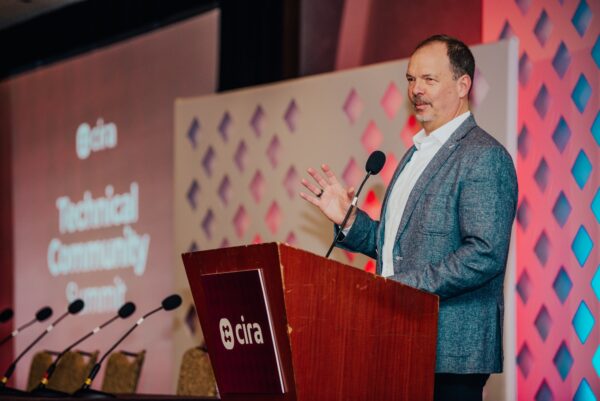
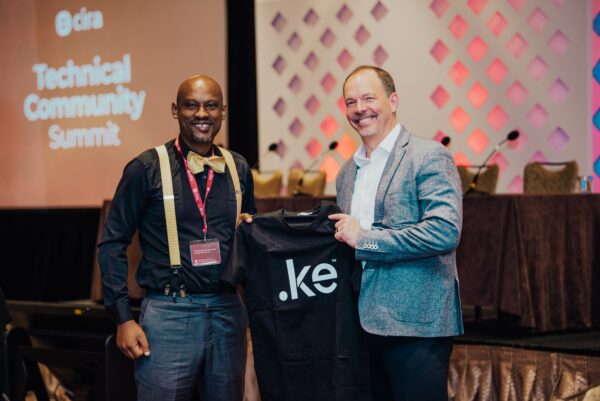
Photo from CIRA Technical Community Summit, held on the sidelines of ICANN82 in Seattle. Those depicted do not necessarily endorse the contents of this report.






Key recommendations
Reaching outcomes that retain and respect the core elements of a multistakeholder approach will be challenging to navigate in the coming years. Openness to new ideas and evolution is essential, especially in a world shaped by growing geopolitical turbulence and emerging new technologies.
Technical community members involved in this project also highlighted ongoing and significant differences in the priorities and challenges faced by technical communities in various regions.
Over the course of our research project, we had the opportunity to delve into detail on all of these challenges and more. We conclude by presenting a number of interlocking strategic proposals, based on input and feedback from participants, as well as research and reflections on developments in the internet space, technology, global governance and geopolitics:
Funding coordination
We call for improved coordination around funding issues, noting funding for IGF-related processes in particular.
Deeper exchanges
We highlight the need for deeper exchanges between decision-making fora (such as ICANN) and dialogue-driven fora (such as the IGF), with a view to sharing outcomes, best practices and lessons learned.
Fostering multistakeholderism
We recommend the fostering of multistakeholder governance in public policymaking, noting the level of specialist expertise that the technical community can bring to the table.
Innovation on governance models
We urge continued innovation on technical governance models, including several specific potential solutions suggested by participants for further deliberation.
Acknowledgements
Here at CIRA, we believe that a multistakeholder approach to internet governance is of critical importance and that the internet’s technical community has a vital role to play in shaping its future. We hope this report proves a valuable contribution to this ongoing dialogue.
We note that while this report presents insights from a diverse range of technical community members, it does not encompass every perspective within this group. We also note that—while this report focuses on the perspectives and roles of the technical community—multistakeholder internet governance necessarily relies on contributions from all stakeholder groups, ensuring a balanced and inclusive approach to addressing the internet’s evolving challenges.
CIRA extends its gratitude to all participants of the Technical Community Summit, as well as those who responded to the questionnaire and took part in interviews—your contributions made this report possible.
Contact us: [email protected]