THE PROJECT
The First Nations Technology Council (FNTC) is an Indigenous-led organization mandated by B.C. First Nations leadership to advance digital equity and innovation, ensuring that individuals, communities and Nations play an active role in leading and shaping the technology sector. With support from CIRA, FNTC launched the Indigenous Digital Enablement Series (IDES) phase of its Indigenous Digital Equity Strategy in response to community feedback.
“Initially, we envisioned a unified strategy,” said Megan Jordan, Vice-president, External Relations. “But it became clear that First Nations needed individual tools and practical resources to advocate for digital equity on their own terms.”
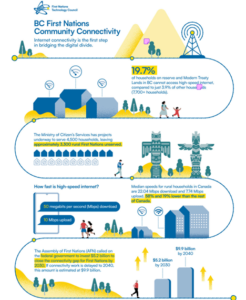
The first report in the series, BC First Nations Community Internet Connectivity, was published in 2024 and distributed to all 204 First Nations in B.C.—by email, and also in hard copy to those without internet access. The report revealed that nearly 20% of First Nations in B.C. still lacked internet access in 2024, underscoring the urgency of the work. For some, this was the first time they could see their connectivity situation their real digital divide—in writing. It became something they could bring to funders, service providers and government partners.
The project marked a shift from a one-size-fits-all strategy to a flexible, community-driven series of research reports, infographics and videos. “We’re not advocating on behalf of communities,” said Lindsay Street, Manager of Research Projects. “We’re giving them the research and data so they can make decisions and take actions that reflect their specific contexts.”
COMMUNITY IMPACT
The IDES has become more than a series of reports—it’s a tool for action. The first report has already been used by several Nations to support funding applications for broadband infrastructure, advocate for upgrades to outdated systems and push for accountability from telecom providers. “We’ve heard from communities who are using the data to strengthen their proposals and make a case for urgent investment,” noted Jordan. “It’s helping them move from anecdotal evidence to hard numbers.”
The shift from a centralized strategy to a flexible, community-driven series also helped to build trust. “Sometimes you set out with the best intentions and realize that’s not what the community needs,” Jordan reflected. “Pivoting to a series allowed us to be more responsive, and that’s what made the data useful.”
Rather than speaking for communities, FNTC is equipping them to speak for themselves, with data that reflects their realities and supports their goals. “We’re excited to be more intentional about our impact,” said Jordan. “Funders like CIRA who are flexible and understanding have given us the grace to pivot and grow—and that’s allowed us to build something truly useful for communities.”
Related links
- First Nations Technology Council: https://www.technologycouncil.ca/
- FNTC Indigenous Digital Equity Strategy: https://www.cira.ca/en/projects/towards-digital-equity-a-strategy-and-roadmap-indigenous-innovation-and-technology/