For years, internet plans were sold on speed—nothing else. Bigger numbers were easy to advertise and simple to compare. But most people don’t live their lives in Mbps. They care whether their connection works when it counts, files get sent, video calls stay clear and streaming doesn’t stall at peak time.
That’s the difference between speed and internet performance.
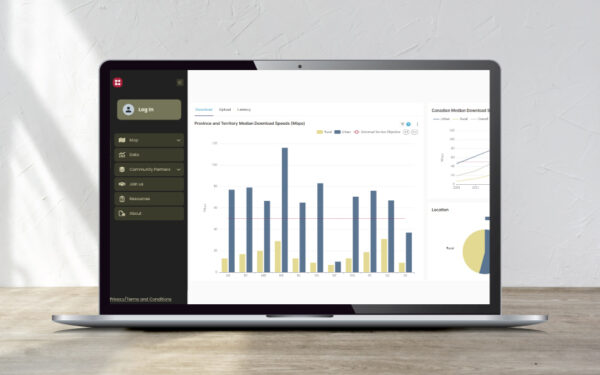
CIRA’s Internet Performance Test (IPT), launched in 2015, was originally aimed at helping Canadians check their speeds while contributing to a public dataset. However, as more of our lives moved into real-time applications like video calls, multiplayer gaming and virtual classrooms, the idea of “good internet” expanded far beyond download and upload speeds.
So, our measurement tools had to evolve too.
Reliability is the real product
Now that broadband has matured, the focus has shifted from “fastest on paper” to “best in practice.” It’s no longer about network uptime, but whether performance holds steady during busy hours, Wi-Fi works throughout the home and outages are fixed quickly. That day-to-day consistency is what shapes satisfaction.
Modern broadband quality increasingly depends on real-world reliability metrics such as latency (delay), jitter (variation in delay) and packet loss (data that never arrives). These aren’t abstract engineering terms, they’re the everyday differences between a smooth call and a choppy one, between a stable connection and one that “feels bad” even when the speed numbers look fine.
Newer measurement capabilities also focus on capturing patterns over time through recurring automated tests to show how performance shifts across the day—not just a one‑off snapshot, but ongoing reliability.
Reporting requirements have expanded too
It’s not just consumer expectations that have shifted. Canada’s telecom regulator (the CRTC) is paying more attention to service quality and resiliency, not only requiring providers to report major service outages but also monitoring certain quality of service (QoS) indicators.
These metrics are included in the CRTC’s Universal Service Objective, though sometimes overlooked. Yes, speeds of 50 Mbps down and 10 Mbps up tend to grab the headlines, but the commission has also indicated targets for maximum latency, jitter and pack loss thresholds.
Where is this heading?
As we celebrate a decade plus of the IPT, the shift from measuring only speed to also assessing quality marks an important evolution in how we think about the internet.
Faster speeds will always be welcome, but it’s the combination of speed and reliability that determines whether a connection truly meets customer needs.
Thanks to IPT innovations like measurement of latency, jitter, packet loss and automated testing, Canadians can now get a nuanced, realistic read on their internet health. In other words, the science of internet performance is maturing, ensuring that fast internet also means “good internet” for everyone.
And with more than 1.7 million tests run and counting, we’re collectively contributing to a better understanding of our networks, paving the way for a more reliable and accessible internet experience in Canada.
This post is the third of a five-part series celebrating a decade of the IPT. In upcoming posts, we’ll continue to explore broadband trends, spotlight community success stories and look ahead to the future of internet measurement in Canada.
Jeff is the Internet Performance Test (IPT) Program Manager. The IPT is the most advanced internet quality test in Canada that provides public access to the performance results. Jeff is an avid advocate for how IPT data, maps and reports can help stakeholders identify areas with limited access, improve funding decisions, evaluate the success of funded projects and do so at a high degree of geographic granularity.